Exploring Bundesliga Betting Markets
 Available in US
Walking into the world of football betting for the first time can feel like entering a foreign country where everyone speaks a language you almost understand. The terminology seems familiar, the concepts appear straightforward, yet the sheer variety of options available creates confusion that prevents many from engaging confidently. Match result bets make sense intuitively, but what exactly does Asian handicap mean, and why would anyone choose it over simpler alternatives? The questions multiply quickly, and without clear answers, potential bettors either stick to basic options that may not serve their needs or avoid the activity entirely.
This situation represents a missed opportunity because understanding betting markets opens doors to more sophisticated engagement with football. Different markets capture different aspects of matches, allowing bettors to express specific views rather than making binary predictions about winners and losers. Someone who believes a match will be high-scoring but cannot confidently predict the winner has options beyond abstaining. Someone convinced a favorite will win but uncertain about the margin can find markets that reflect that precise view. The flexibility exists, but accessing it requires knowledge that does not come automatically.
What follows is a comprehensive exploration of football betting markets, from the simplest to the most complex. The goal is not merely to define terms but to explain when each market makes sense, what advantages and disadvantages it presents, and how serious bettors think about incorporating different options into their approaches. Along the way, we will address common misconceptions and highlight the strategic considerations that separate informed betting from random selection. The Bundesliga, with its distinctive characteristics, will provide examples throughout, though the principles apply across football competitions.
To truly capitalize on Asian handicaps and goal lines, you need to implement advanced Bundesliga betting strategies tailored to specific match scenarios.
Match Result (1X2) Betting Variations

The match result market, often called 1X2, represents the most fundamental betting option. You predict whether the home team wins, the match ends in a draw, or the away team wins. The simplicity explains its popularity, but simplicity comes with limitations that more experienced bettors learn to navigate.
Bookmaker margins on match result markets tend to be relatively high precisely because these markets attract the most recreational money. Everyone understands the concept, which creates volume that bookmakers can profit from even with competitive individual odds. The accessibility that makes match result attractive for beginners also makes it potentially less favorable for those seeking optimal value.
Despite these limitations, match result betting remains valuable in specific circumstances. When you have strong conviction about a particular outcome and the odds adequately compensate for that probability, the straightforward nature of the market becomes an advantage rather than a limitation. There is nothing inherently wrong with match result betting; the key is recognizing when it represents the best expression of your view and when alternatives might serve you better.
The pricing of draws deserves particular attention because many bettors underestimate their frequency. Approximately 25% of Bundesliga matches end in stalemates, yet recreational money disproportionately flows toward home and away wins. This imbalance can create value on draw selections, particularly in matches between evenly matched teams where bookmakers shade odds toward outcomes that attract more betting action.
Double chance markets emerged to address the frustration of narrowly missing predictions. Instead of choosing one outcome, you cover two possibilities simultaneously. Home or Draw protects you if the favorite wins or the match ends level. Away or Draw similarly covers the underdog plus the stalemate. Home or Away eliminates the draw entirely, paying out if either team wins regardless of which one. The reduced risk comes with reduced odds, but the trade-off makes sense in situations where you can eliminate one outcome more confidently than you can predict between the remaining two.
Understanding when double chance offers genuine value requires probability assessment. If you believe a home win has 45% probability and a draw has 30% probability, home or draw represents 75% combined probability. The odds offered must compensate appropriately for that probability to represent value. Simply taking lower odds for increased coverage does not automatically create favorable bets; the mathematics must support the selection.
Draw No Bet takes the protection concept further by removing the draw as a losing outcome. If you back a team to win and the match ends level, your stake returns. You only lose if the team you backed loses. This market works particularly well when backing moderate favorites against opponents capable of securing draws but unlikely to win outright. The returned stake on a draw converts what would be a loss in match result betting into a neutral outcome.
The strategic value of these variations depends on how you assess match probabilities. If you believe a home team has a 50% chance of winning, 25% chance of drawing, and 25% chance of losing, the optimal market depends on how bookmakers have priced each outcome. Sometimes match result offers better value; sometimes double chance or draw no bet provides superior expected returns. The calculations require effort, but that effort separates profitable betting from entertainment expenses.
Goal-Related Markets and Their Appeal

Goal-related markets capture aspects of matches that outcome markets cannot address directly. A match between two attacking teams might produce any result from a home win to an away victory, but goals seem almost guaranteed regardless of who scores them. These markets allow you to express that view without predicting winners.
Over/Under betting asks whether the total goals in a match will exceed or fall below a specified line. The most common line is 2.5, meaning Over wins if three or more goals are scored and Under wins if two or fewer occur. Different bookmakers offer various lines, from 0.5 to 5.5 or beyond, each capturing different probability assessments about match goalscoring.
The Bundesliga’s reputation for attacking football makes goal markets particularly relevant. The league consistently produces higher scoring averages than most major European competitions, with matches averaging around three goals. This baseline affects how bookmakers set lines and how bettors should approach these markets. An Over 2.5 bet in the Bundesliga carries different probability than the same bet in a more defensively oriented league.
Understanding which teams and matchups produce goals requires analysis beyond league averages. Some clubs consistently participate in high-scoring matches regardless of opposition. Others grind out low-scoring affairs that frustrate Over bettors. When high-scoring teams meet defensive units, the outcome becomes less predictable than when two teams with similar tendencies clash. Building profiles of each team’s goalscoring patterns provides foundation for informed goal market betting.
Alternative goal lines allow more nuanced positions. Over 1.5 goals offers lower odds but higher probability, suitable when you expect scoring but not necessarily abundance. Over 3.5 or Over 4.5 lines pay substantially more but require prolific matches that occur less frequently. Selecting the appropriate line depends on your assessment of the specific fixture and where you believe probability diverges most from market pricing.
Both Teams to Score, abbreviated as BTTS, has become enormously popular among football bettors. The market asks simply whether both teams will find the net during the match. Yes pays out if each side scores at least once; No wins if either team fails to score. The binary nature creates clarity, while the focus on goalscoring rather than match outcome appeals to those who want action without predicting winners.
BTTS Yes hits in approximately 60% of Bundesliga matches, a figure that reflects the league’s open style. However, this average obscures significant variation between fixtures. Matches involving defensively solid teams produce BTTS No at higher rates, while clashes between attacking sides with vulnerable defenses almost inevitably see both teams score. The betting value lies not in playing league averages but in identifying specific matchups where probabilities diverge from how markets are priced.
Clean sheet markets offer another perspective on defensive performance. Betting on a team to keep a clean sheet requires them to prevent any opposition goals. The inverse, betting against a clean sheet, requires only one goal to be conceded. These markets suit situations where you have views on defensive quality without necessarily predicting overall scoring levels.
Exact score betting offers high odds in exchange for precise predictions. Correctly predicting a 2-1 home win or a 3-3 draw pays substantially more than backing over/under or BTTS because the probability of any specific scoreline is relatively low. These markets attract those seeking large returns from small stakes, though the mathematical expectation often favors bookmakers more heavily than in simpler markets.
The appeal of exact score betting lies in occasional large payouts rather than consistent profitability. Some bettors include exact score selections in accumulators to boost potential returns, accepting that these legs will fail more often than they succeed. Others avoid the market entirely, viewing it as a form of lottery ticket rather than a serious betting option. Neither approach is inherently correct; the key is understanding what you are accepting when you engage with high-odds, low-probability markets.
Handicap Betting Explained
Handicap markets address a fundamental limitation of match result betting: when one team is heavily favored, the odds on their victory become so low that backing them offers poor value even if they are likely to win. Handicaps create more balanced propositions by giving advantages or disadvantages to teams before the match begins.
European handicaps, sometimes called three-way handicaps, add or subtract goals from a team’s final score. If you back Bayern Munich at minus one goal handicap, they must win by at least two goals for your bet to succeed. A one-goal victory means they only cover one goal of the handicap, resulting in a draw on the bet. Any other outcome loses. The handicap transforms what would be heavy favorites into more evenly matched betting propositions.
The three-way nature of European handicaps means draws on the handicap line remain possible outcomes. This adds complexity compared to Asian alternatives but also creates opportunities when draw outcomes are mispriced. Understanding how actual match results translate to handicap results requires practice but becomes intuitive with experience.
Asian handicaps refine this concept by eliminating draw outcomes. They accomplish this through half-goal handicaps and split handicaps that return portions of stakes under certain outcomes. A team on a minus 1.5 handicap must win by two or more goals; there is no push possibility because you cannot score half a goal. A team on minus 1.25 handicap essentially splits your stake between minus 1 and minus 1.5 lines, creating partial win or loss outcomes.
The complexity of Asian handicaps deters many recreational bettors, which creates opportunities for those willing to learn. Because fewer people participate in these markets, bookmaker margins sometimes differ from match result markets. More importantly, Asian handicaps allow precise expression of views about match margins that simpler markets cannot capture.
Consider a match where you believe the favorite will likely win but probably not by a large margin. Match result offers only their victory odds, which might be unattractive. Asian handicap at minus 0.5 or minus 0.75 allows you to back the favorite with protection against narrow defeats converting to total losses. Alternatively, backing the underdog on plus handicaps expresses the view that they will keep the match competitive even if they do not win.
Split handicaps like plus or minus 0.25 or 0.75 require understanding how stakes divide between adjacent whole and half lines. At minus 0.75, half your stake goes on minus 0.5 and half on minus 1. A one-goal victory wins the minus 0.5 portion and pushes the minus 1 portion, returning 75% of potential winnings plus half your stake. The mathematics seem complex initially but become manageable with practice.
Handicap markets become essential for Bundesliga betting given Bayern Munich’s dominance. Their match result odds against weaker opponents often fall below 1.20, offering minimal return for substantial risk. Laying Bayern at minus 1.5 or minus 2 goals provides better value propositions when you believe they will win comfortably. Conversely, backing underdogs at plus handicaps allows profitable positions even when those teams lose, provided they lose by less than the handicap margin.
Player and Special Markets

The expansion of betting markets into player-specific propositions has transformed how bettors engage with football. Rather than predicting team outcomes, you can focus on individual performances, backing specific players to score, assist, receive cards, or achieve other measurable outcomes.
Anytime goalscorer markets ask whether a particular player will score at any point during the match. First goalscorer markets identify who will open the scoring. Last goalscorer captures who will register the final goal. Each variation offers different odds reflecting different probabilities, with first goalscorer typically paying highest due to the added difficulty of predicting sequence rather than just occurrence.
These markets reward detailed knowledge about teams and players that casual observers typically lack. Understanding who takes penalties matters because spot kicks provide scoring opportunities independent of open play. Knowing which players have been in good form, who plays centrally versus wide, and how teams structure their attacks all inform goalscorer selections. The bettors who profit from these markets typically possess deeper knowledge than those simply backing famous names.
Shot markets have grown in popularity with increased statistical tracking. You can bet on whether a player will register a shot on target, how many shots they will have, or similar propositions tied to individual performance metrics. These markets suit bettors who understand playing styles and roles well enough to predict involvement levels even when goals prove elusive.
Card markets offer another avenue for those with specific knowledge. Some referees consistently show more cards than others, creating predictable patterns that informed bettors can exploit. Some players accumulate bookings due to their physical style or tendency toward confrontation. Combining referee tendencies with player profiles allows informed predictions about card markets that casual observers would approach randomly.
Corner betting has developed a dedicated following among analytical bettors. Matches produce corners with reasonable predictability based on the teams involved. Attacking teams playing against sides who defend deep generate more corners than open matches where both teams transition quickly. Historical patterns provide foundation for corner market betting, though the variance within individual matches remains higher than in goal markets. Understanding which team combinations produce corner-heavy matches allows targeted selections in this specialized market.
Combining Markets and Accumulator Considerations

Accumulator betting combines multiple selections into single bets where all selections must win for the bet to succeed. The appeal is obvious: modest stakes can return substantial amounts when several predictions prove correct simultaneously. The mathematics, however, consistently favor bookmakers more heavily in accumulators than in single bets.
Each selection in an accumulator multiplies odds together, but each selection also multiplies the probability of failure. Five selections at 2.00 odds each produce combined odds of 32.00, suggesting a thirty-two-fold return on stake. However, if each selection truly represents 50% probability, the chance of all five winning is just over 3%. The bookmaker margin on each selection compounds through the accumulator, eroding expected value with each additional leg.
Despite this mathematical reality, accumulators remain popular and can be used strategically. The key is understanding what you sacrifice for the chance at larger returns. Some bettors allocate small portions of their bankroll to accumulator entertainment while focusing serious stakes on single bets with better expected value. Others avoid accumulators entirely, viewing them as tax payments to bookmakers.
Same-game parlays, which combine multiple selections from a single match, present unique considerations. Outcomes within a match are not independent, creating correlation effects that bookmakers must price. A selection on Bayern Munich winning and Over 2.5 goals are positively correlated because Bayern victories typically involve multiple goals. Whether bookmakers adequately adjust for these correlations determines whether same-game parlays offer value or simply entertainment.
Strategic Considerations Across Markets
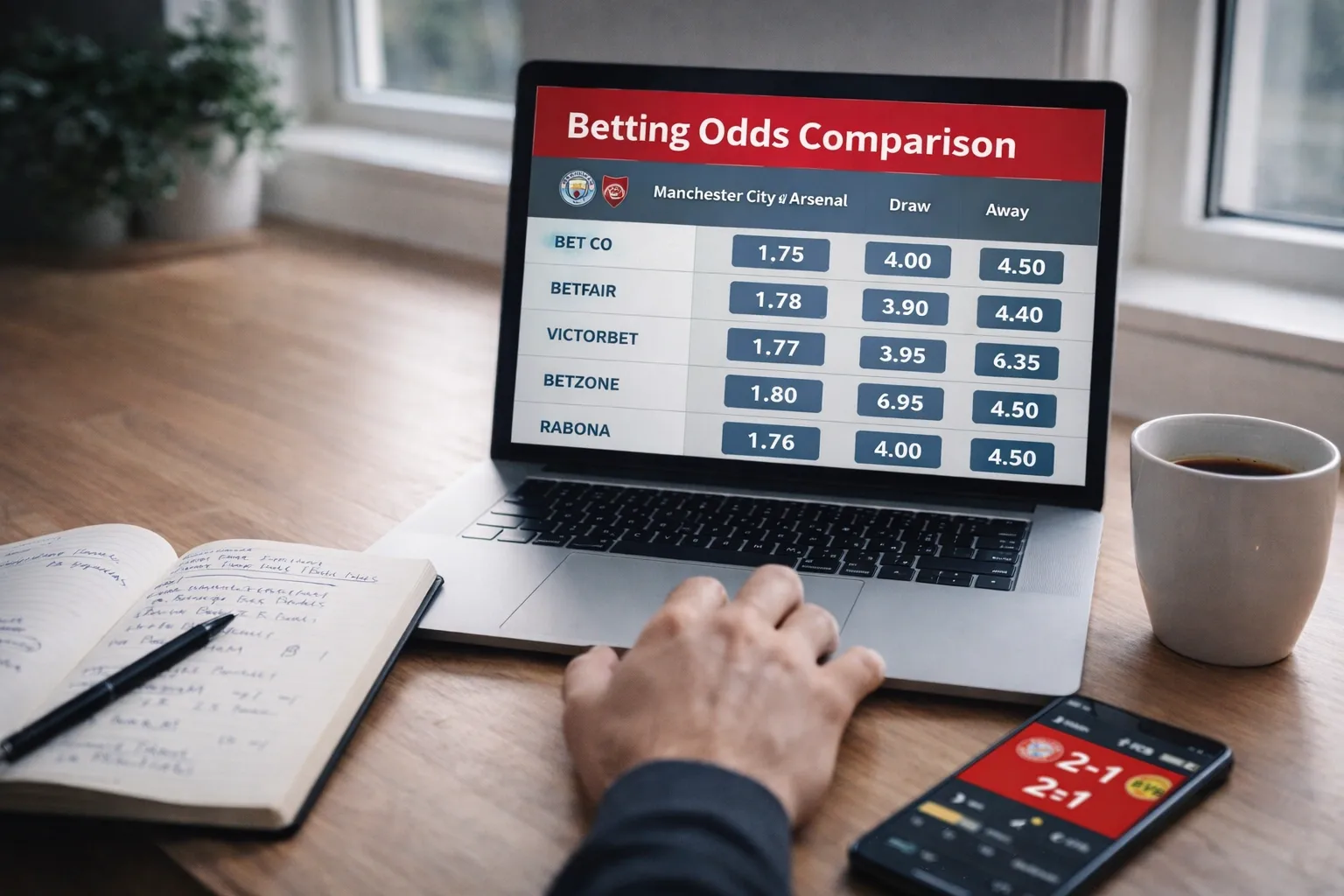
Choosing between betting markets should not be arbitrary. Different markets suit different situations, and developing intuition about which market best expresses your view separates strategic bettors from those who select randomly.
When you have strong directional conviction about match outcomes, match result or handicap markets capture that view directly. When your conviction concerns match characteristics rather than outcomes, goal markets or specials may serve better. When you see value in supporting an underdog who might lose competitively, Asian handicaps with positive lines express that position precisely.
Market selection should reflect the nature of your edge. If your analysis reveals that a team consistently keeps matches close without winning, plus handicaps capture that insight better than match result. If you identify matches likely to produce goals without directional conviction, over/under markets express that view optimally. Matching markets to insights maximizes the value of your analysis.
Liquidity considerations affect market selection for larger stakes. Match result and major Asian handicap lines attract the most betting volume, allowing substantial wagers without moving prices. Obscure player props or exact score markets may have limited liquidity, meaning large bets either cannot be placed or significantly alter the available odds.
The timing of bets interacts with market selection. Goal lines often move more dramatically than match result odds as markets react to team news. Handicap lines shift based on sharp money that values margin precision. Understanding how different markets react to information helps determine when to place bets and in which markets.
Finally, bankroll allocation across markets should reflect both conviction levels and market efficiency. Placing larger stakes in markets where you believe you have genuine edges and smaller stakes in markets where you seek entertainment rather than profit creates sustainable approaches. The goal is not to maximize action but to maximize expected returns while managing the variance inherent in all betting activity.
What emerges from understanding betting markets comprehensively is freedom to engage with football on your own terms. Rather than forcing views into limited options, you can find markets that capture exactly what you want to express. This flexibility transforms betting from simple prediction into strategic decision-making, where market selection itself becomes part of the skill that separates successful bettors from the crowd. The variety of available markets is not complexity for its own sake but opportunity for those willing to understand what each option offers.
Build a winning portfolio today by following the best site for German football predictions.
