History and Evolution of the Bundesliga
 Available in US
Football existed in Germany long before the Bundesliga came into being, but it operated in a fragmented, almost chaotic manner that seems unimaginable today. Regional leagues dominated the landscape, with champions from various parts of the country meeting in knockout tournaments to determine a national winner. The system produced memorable moments and legendary clubs, but it also created inconsistencies that frustrated fans, players, and administrators alike. A team could dominate their regional competition only to fall apart against unfamiliar opposition in a one-off match. The need for something more structured, more professional, and more entertaining became increasingly obvious as German football entered the 1960s.
What emerged from those discussions would reshape not just German football but influence how leagues around the world thought about competition, fan engagement, and the relationship between sport and commerce. The Bundesliga, launched in 1963, represented a bold experiment in creating a unified national competition that could compete with the established leagues of England, Spain, and Italy. Six decades later, that experiment has produced one of the most successful sporting competitions on the planet, known for its attacking football, passionate supporters, and distinctive approach to club ownership.
Understanding how the Bundesliga evolved from those early days to its current form matters for anyone who wants to engage seriously with German football. The patterns established decades ago continue to influence how clubs operate, how matches unfold, and how the entire ecosystem functions. History is not merely background information here. It provides context that shapes present-day realities in ways both obvious and subtle. The clubs that dominated in the 1970s still carry that legacy, and the decisions made about league structure continue to affect everything from ticket prices to transfer policies.
The journey from regional amateur leagues to a globally broadcast professional competition involves compelling characters, dramatic turning points, and lessons about how sporting institutions develop over time. Some of what happened was planned, the result of careful deliberation by administrators who saw what professional football could become. Much more evolved organically, as clubs, players, and supporters adapted to circumstances no one fully anticipated. The story of the Bundesliga is ultimately a story about how a sporting competition becomes embedded in a culture, shaping and being shaped by the society around it.
To understand how past dominance translates to current odds, you should review our detailed analysis of current Bundesliga teams and championship contenders.
The Origins of Professional German Football
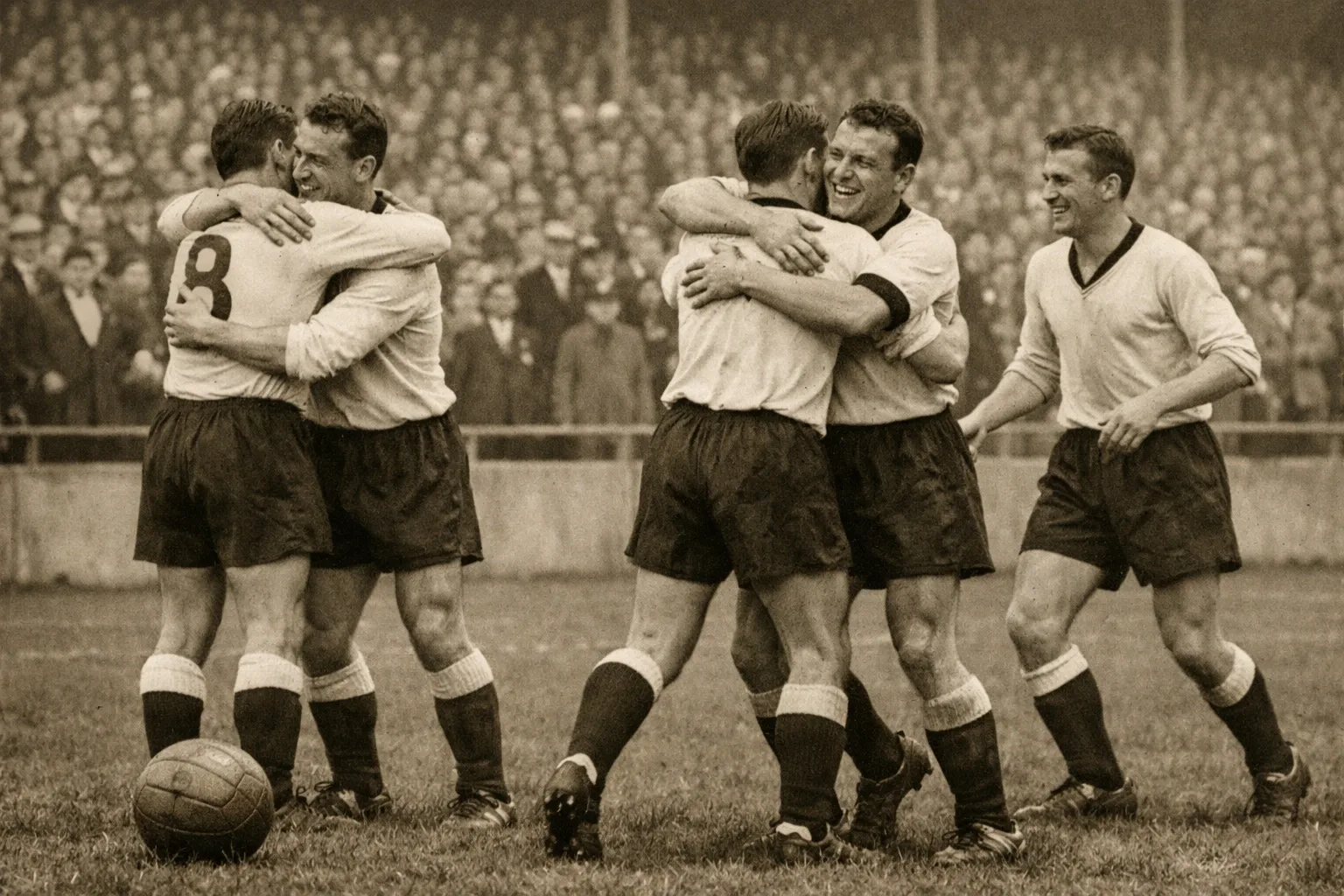
The decision to create the Bundesliga did not emerge from a vacuum. Throughout the 1950s, German football had achieved considerable success on the international stage, most notably winning the 1954 World Cup in what became known as the Miracle of Bern. That victory captured the imagination of a nation still recovering from the devastation of World War II and demonstrated that German players could compete with anyone. Yet the domestic structure remained stubbornly amateur in its organization, even as professionalism had transformed football elsewhere in Europe.
Five regional Oberligen fed into a complex playoff system that determined the national champion. The setup created logistical nightmares and competitive imbalances. Clubs from wealthier regions could attract better players through under-the-table payments, while smaller clubs struggled to retain talent. The disparity between official amateur status and actual financial arrangements became increasingly untenable. Players who wanted genuine professional careers often left for foreign leagues, weakening the overall quality of domestic competition.
The German Football Association, known as the DFB, began serious discussions about establishing a national league in the early 1960s. The debates were contentious, with regional interests resisting centralization and traditional clubs fearing the financial demands of professional competition. Eventually, pragmatism prevailed. On July 28, 1962, the DFB voted to create the Bundesliga, with the inaugural season scheduled for 1963-64.
Selecting the founding members proved almost as contentious as the decision to create the league itself. With limited spots available and numerous clubs claiming eligibility, the selection committee faced impossible choices. Sixteen clubs ultimately received invitations based on a combination of sporting merit, financial stability, and geographic distribution. Some of those original members remain fixtures of German football today, while others have faded into lower divisions or disappeared entirely.
The criteria for selection sparked controversies that echo through German football history. Hertha Berlin, despite their strong tradition, missed out due to financial concerns. 1860 Munich earned inclusion ahead of rivals Bayern Munich, a decision that seemed reasonable at the time but looks almost absurd given subsequent developments. These early choices shaped trajectories for decades, demonstrating how administrative decisions at league formation can have consequences far beyond what anyone anticipated. The clubs that missed out faced uphill battles to establish themselves, while those included gained advantages that compounded over time.
The first Bundesliga season kicked off on August 24, 1963, with eight matches played across the country. Borussia Dortmund defeated Werder Bremen 3-2 in a game that set the tone for what would become a high-scoring, entertaining league. The attacking football on display that opening weekend was not accidental. German football culture had always favored forward play, and the new professional structure amplified rather than dampened those tendencies.
FC Koln won that inaugural championship, finishing ahead of Meidericher SV, later known as MSV Duisburg, and Eintracht Frankfurt. The title race went down to the final matchday, establishing a tradition of competitive seasons that would persist, with occasional exceptions, throughout the league’s history. Attendance figures exceeded expectations, validating the decision to professionalize and suggesting that German fans had an appetite for high-quality domestic football when presented in an attractive format.
The early seasons established patterns that would persist for decades. Clubs invested in stadium improvements to accommodate growing crowds. Coaching became a more specialized profession, with tactical innovation rewarded in ways the amateur system had never managed. Players could finally pursue football as a genuine career without the fiction of amateur status masking professional arrangements. The professionalization was not merely administrative but transformed how German football operated at every level.
The Golden Era and European Success

The establishment of the Bundesliga coincided with a period of remarkable German success in European competition. Bayern Munich, who had not been among the founding members but earned promotion to the top flight in 1965, would become the dominant force both domestically and continentally. Their rise represented a shift in German football’s center of gravity from traditional powers in the north and west toward Bavaria.
Bayern’s European Cup victories in 1974, 1975, and 1976 announced the Bundesliga as a breeding ground for elite talent. Players like Franz Beckenbauer, Gerd Muller, and Sepp Maier became global stars, their success reflecting the league’s ability to develop and showcase world-class footballers. The attacking football that characterized the Bundesliga translated well to European competition, where cautious tactics often dominated.
Borussia Monchengladbach emerged as Bayern’s primary domestic rival during this period, claiming five championships between 1970 and 1977. Their rivalry defined an era, with both clubs pushing each other to higher standards. The competitive tension produced some of the most memorable matches in Bundesliga history and demonstrated that the league could sustain compelling narratives beyond individual seasons. Gladbach’s European adventures, including reaching the European Cup final in 1977, added international credibility to their domestic achievements.
The tactical innovations of this period deserve recognition. German coaches developed systems that balanced defensive responsibility with attacking freedom, producing teams that could compete with anyone in Europe. The libero role, perfected by Beckenbauer, demonstrated tactical sophistication that influenced football globally. These ideas emerged from a culture that valued football intelligence alongside physical attributes.
Hamburg reached the European Cup final in 1980 and won the trophy in 1983, further establishing the Bundesliga’s credentials. The presence of multiple German clubs in European semifinals and finals became almost routine, a testament to the overall quality of the competition. Young players developed in an environment where attacking football was valued and where European exposure came regularly to those who excelled domestically.
The financial structures of the era differed dramatically from modern football. Television revenue remained modest, and clubs relied heavily on gate receipts and local sponsorship. This created a relatively level playing field where smart management and good coaching could overcome financial disadvantages. Clubs could not simply buy their way to success because the money available to even the wealthiest clubs remained limited by today’s standards.
Transfer fees, while growing, had not yet reached the astronomical levels that would later transform the sport. Players often spent their entire careers at single clubs, building deep connections with supporters and becoming genuine club legends rather than mercenaries moving from one contract to the next. This stability contributed to distinct club identities and playing styles that fans could recognize and appreciate. The bond between player and club carried emotional weight that commercial football often struggles to replicate.
Reunification and the New German Football
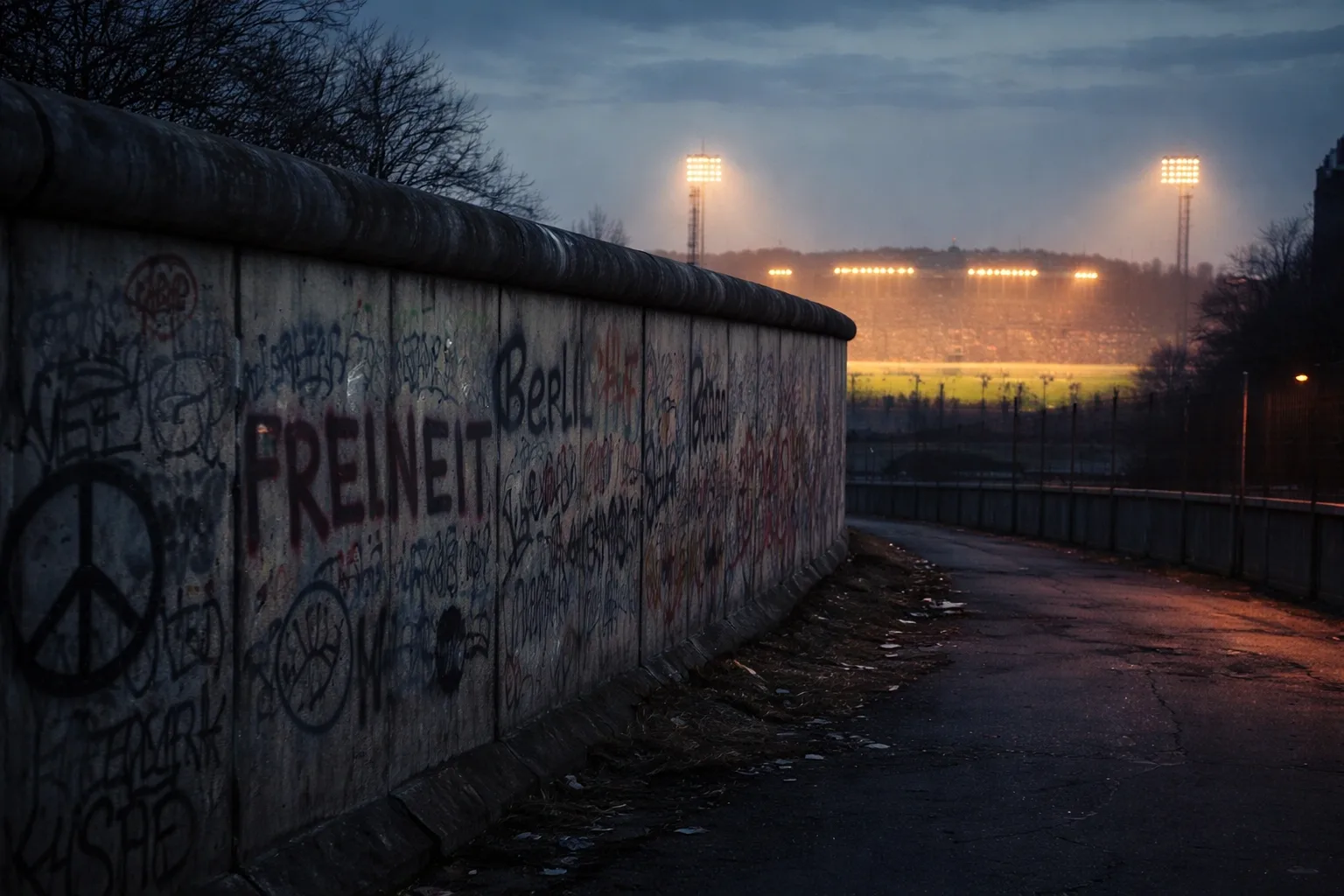
The fall of the Berlin Wall in 1989 and subsequent German reunification presented the Bundesliga with challenges and opportunities unlike anything it had previously faced. East German football had operated under a completely different system, with state-supported clubs dominating a league that had limited exposure to Western competition. Integrating these clubs into a unified structure required careful planning and considerable resources.
The DDR-Oberliga, East Germany’s top division, had produced competitive teams and talented players, but under conditions that bore little resemblance to Western professionalism. State enterprises sponsored clubs, providing resources that had nothing to do with commercial viability. When that support vanished overnight, many Eastern clubs faced existential crises. The adjustment required was not merely sporting but involved complete organizational transformation.
The 1991-92 season marked the first fully unified Bundesliga, with two East German clubs, Hansa Rostock and Dynamo Dresden, joining the top flight. The transition proved difficult for most Eastern clubs, who lacked the financial infrastructure and commercial experience of their Western counterparts. Decades of communist-era management had left facilities outdated and fan bases, while passionate, unable to generate the revenue needed to compete professionally.
Despite these challenges, reunification brought fresh energy and new markets to German football. Cities that had been cut off from Western competition suddenly had access to Bundesliga matches, expanding the league’s reach and potential audience. Young players from the East brought different training backgrounds and playing styles, enriching the overall talent pool. The integration, while imperfect, ultimately strengthened German football even as individual Eastern clubs struggled.
Borussia Dortmund emerged as the dominant force during the mid-1990s, winning consecutive championships in 1995 and 1996 before capturing the Champions League in 1997. Their success demonstrated that clubs beyond Bayern could compete at the highest level with the right combination of coaching, recruitment, and financial management. Ottmar Hitzfeld’s team played attractive football that earned admirers throughout Europe and proved that the Bundesliga’s attacking traditions could translate to continental success.
The financial landscape began shifting dramatically during this period. The Bosman ruling in 1995 transformed player movement across European football, enabling out-of-contract players to move freely between clubs in different countries. German clubs initially struggled to adapt, losing key players to wealthier leagues in England, Spain, and Italy. The exodus of talent forced a reckoning with how the Bundesliga would position itself in an increasingly globalized football market.
Television rights became increasingly valuable, providing clubs with revenue streams that dwarfed traditional gate receipts. The additional money enabled larger transfer budgets and higher wages, though German clubs generally remained more conservative than their counterparts in other major leagues. This financial restraint, partly cultural and partly regulatory, would become a defining characteristic of the Bundesliga’s approach to the modern football economy. The foundations laid during this period continue to shape how German clubs operate today.
Modern Bundesliga: Entertainment and Global Appeal
The twenty-first century Bundesliga has carved out a distinctive identity in European football, one that balances competitive integrity with entertainment value. While Bayern Munich’s dominance has created predictability at the top of the table, the league has maintained its reputation for attacking football, affordable tickets, and passionate fan cultures that other competitions struggle to match.
The introduction of the 50+1 rule formalized what had previously been informal expectations about club ownership. Under this regulation, club members must maintain majority control over voting rights, preventing the kind of billionaire takeovers that transformed clubs in England and France. The rule has attracted both praise and criticism. Supporters value the democratic traditions it preserves, while critics argue it limits the investment needed to compete with oil-funded projects elsewhere.
Red Bull’s entry into German football through RB Leipzig challenged these traditions and sparked debates about the league’s identity. The club’s rapid rise from the fifth division to Bundesliga contention demonstrated what external investment could achieve, even within the constraints of German regulations. Their success forced other clubs to reassess their own approaches to development and competition. The controversy surrounding Leipzig has not subsided, but their presence in the top flight appears permanent.
Stadium experiences in the Bundesliga remain distinctive. Standing sections, known as terraces, survive at German grounds when they have largely disappeared elsewhere in top-tier European football. Ticket prices remain relatively affordable, enabling diverse crowds that include young people, families, and working-class supporters who might be priced out of matches in England or Spain. The atmosphere this creates contributes to home advantages that show up consistently in statistics.
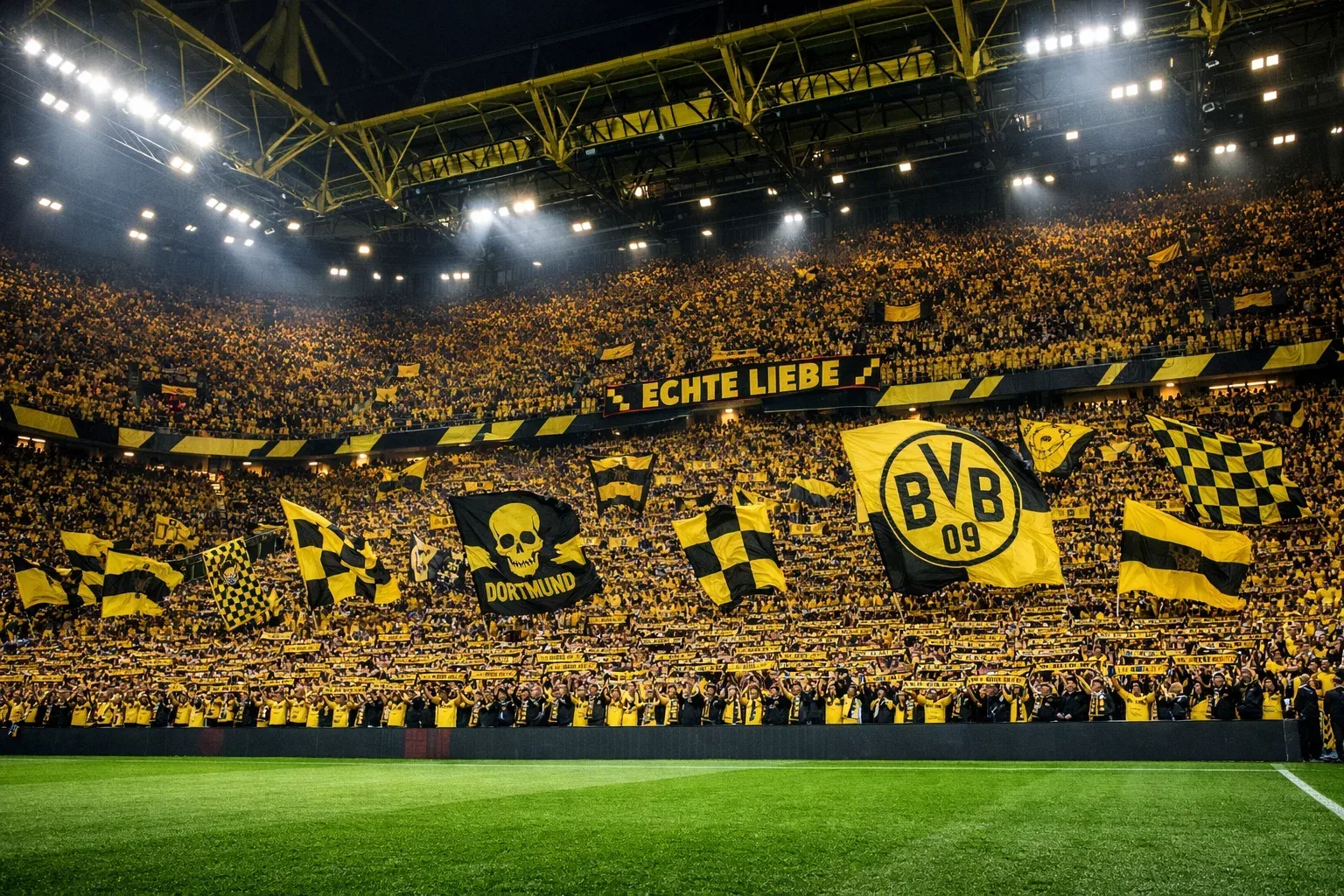
Borussia Dortmund’s Signal Iduna Park, with its famous Yellow Wall holding over 25,000 standing supporters, has become an iconic venue recognized worldwide. The visual impact of that mass of yellow creates images that travel globally, marketing the Bundesliga without requiring expensive advertising campaigns. Other clubs have invested in their own stadium experiences, understanding that atmosphere attracts both fans and television viewers.
International broadcasting has expanded the Bundesliga’s reach dramatically. Matches are now available in over 200 countries, with kick-off times sometimes adjusted to accommodate Asian and American audiences. This global exposure has increased commercial opportunities while also attracting foreign players who might previously have looked elsewhere for their careers. The internationalization has changed squad compositions while not fundamentally altering the league’s character.
The quality of coaching in the Bundesliga has gained recognition in recent years. Jurgen Klopp’s success at Dortmund and subsequently Liverpool demonstrated that German tactical approaches could translate to other environments. Thomas Tuchel, Julian Nagelsmann, and Hansi Flick have all moved from Bundesliga positions to elite jobs elsewhere, their reputations built on work done in Germany. This coaching pipeline reflects broader strengths in German football education and development systems.
Youth development has become a particular strength of the German system. The talent coming through Bundesliga academies has impressed scouts worldwide, with clubs increasingly able to develop players who either contribute domestically or generate significant transfer revenue. This emphasis on development provides a sustainable model that does not depend entirely on external investment, though it requires patience that commercial pressures sometimes discourage.
Statistical Evolution and Patterns for Understanding

The way football is analyzed has transformed since the Bundesliga’s founding, and these changes matter enormously for anyone trying to understand the league deeply. Early seasons relied on basic statistics like goals scored and points accumulated. Modern analysis incorporates expected goals, pressing intensity, progressive passes, and dozens of other metrics that reveal what traditional numbers might obscure.
Goal-scoring patterns in the Bundesliga have remained remarkably consistent across eras. The league has always produced more goals than most major European competitions, a reflection of tactical preferences that value attacking play over defensive solidity. This consistency creates predictability for analytical purposes, as patterns established over decades tend to persist unless specific circumstances disrupt them. The average of around three goals per match has held steady through different eras, different champions, and different playing styles.
Home advantage has evolved but not disappeared. Early Bundesliga seasons showed stronger home performance than modern ones, partly because travel was more arduous and partly because away supporters were fewer and less organized. Contemporary data still shows meaningful home advantages, particularly for clubs with passionate supporter bases, but the gap has narrowed as facilities improved and psychological factors shifted. Understanding these trends helps calibrate expectations for specific fixtures.
The competitive balance within the league has fluctuated significantly. Periods of Bayern dominance alternate with eras of genuine uncertainty, though the recent decade has tilted heavily toward Munich. Understanding these cycles helps contextualize current situations. Bayern’s current run will eventually end, as similar dominant periods ended for previous powerhouses, though predicting exactly when remains impossible.
Transfer market patterns reveal how German clubs have adapted to globalization. Initially resistant to foreign players, the Bundesliga now features squads with diverse national compositions. However, German clubs continue to emphasize youth development more than some competitors, maintaining pathways for domestic talent while also recruiting internationally. This balance affects squad compositions and playing styles in ways that analytical approaches can track.
The winter break, a distinctive feature of the Bundesliga calendar, creates statistical anomalies that careful observers can exploit. Teams return from the break at different levels of preparation, and the first matches back often produce unexpected results. Historical data shows increased variance in these fixtures, a pattern that has persisted despite changes in how clubs use the break period.
Financial fair play regulations, both domestic and European, have shaped how Bundesliga clubs operate. German clubs generally carry less debt than counterparts in other leagues, a reflection of cultural attitudes toward financial management and the regulatory environment. This stability provides a foundation but also creates constraints when competing against clubs operating under different financial philosophies.
The statistical infrastructure supporting modern football analysis continues to improve. German football has embraced data collection and analysis, with clubs investing in analytical departments and external providers offering comprehensive datasets. This information availability benefits serious observers who want to move beyond surface impressions toward evidence-based understanding.
What emerges from examining six decades of Bundesliga history is a competition that has maintained core characteristics while adapting to changing circumstances. The attacking football, the fan cultures, the emphasis on development, and the distinctive ownership structures all trace back to decisions made decades ago. Understanding this evolution provides context that shapes how the league functions today and how it will likely develop in the future. History here is not antiquarian interest but practical knowledge that informs present-day engagement with German football.
For the latest match predictions and odds, visit our premier German football betting guide.
